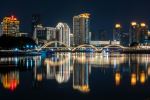
Fuzhou is the capital of Fujian Province in southeastern China, located along the lower Min River near the coast. The city combines a dense urban center with hills, waterways, parks, and historic neighborhoods. It is known as an important center of Min culture and as the birthplace of Fujian cuisine. The Min River runs through the city, while Gushan and other nearby hills provide a contrasting landscape of forests, temples, and walking trails. Fuzhou is also recognized as a national historical and cultural city, with numerous preserved buildings and traditional neighborhoods.
Fuzhou's cultural identity is closely associated with Sanfang Qixiang, or Three Lanes and Seven Alleys, a historic neighborhood of narrow lanes, traditional residences, courtyards, and preserved streets. The area is connected with prominent figures from China's political, literary, and educational history. Fuzhou also has distinctive traditional arts, including bodiless lacquerware, cork painting, Shoushan stone carving, and traditional paper umbrellas. Min opera remains an important local performing art, combining singing, instruments, and theatrical storytelling. These traditions are part of the wider Min culture that developed around the Min River and the coastal communities of Fujian.
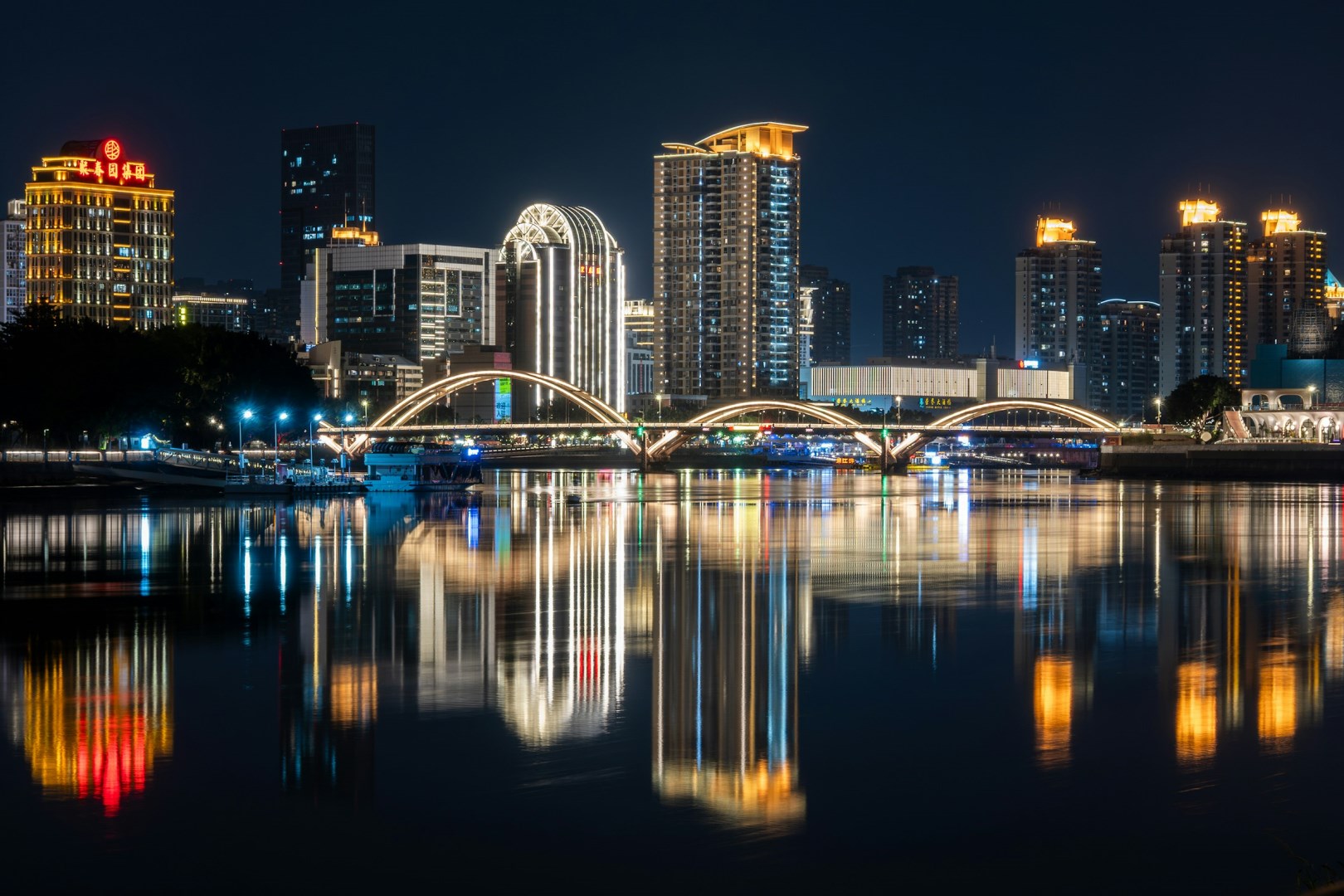
Fuzhou's landscape includes both urban waterways and forested hills. Gushan, or Drum Mountain, rises east of the city and has hiking paths, Buddhist temples, streams, ancient inscriptions, and historic stone carvings. West Lake Park is one of the city's established urban gardens, with ponds, bridges, pavilions, and wooded paths. The historic district of Shangxiahang preserves traditional buildings associated with Fuzhou's commercial and maritime past. Along the Min River, waterfront areas provide views of bridges, boats, and the city's changing skyline. Fuzhou is also known for its hot springs, which occur naturally in several parts of the urban area.
Fuzhou is regarded as the birthplace of Min cuisine, which makes extensive use of seafood, soups, fermented ingredients, and carefully prepared broths. Local specialties include fish balls filled with seasoned meat, lychee pork, oyster cakes, dingbianhu, and the elaborate seafood dish Buddha Jumps Over the Wall. Fish balls are particularly associated with Fuzhou and are made from fish paste formed around a savory filling. The city is also known for its traditional crafts, with bodiless lacquerware, paper umbrellas, and horn combs traditionally regarded as Fuzhou's three famous handicrafts. These foods and crafts remain closely tied to the city's regional identity.