
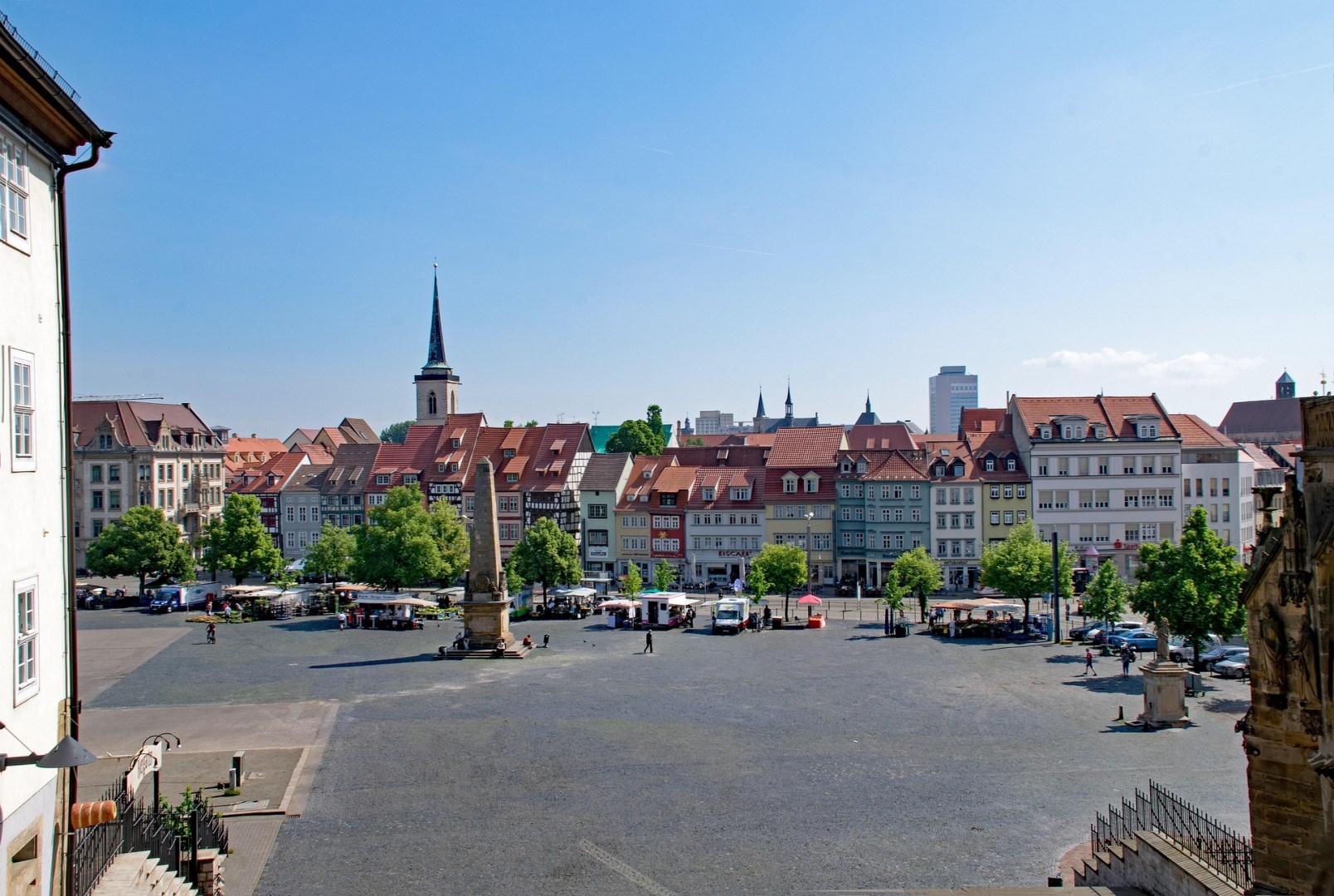
Erfurt
The skyline of Erfurt is shaped by dozens of churches, monasteries, and convents thrusting their pointed steeples upward to the sky. In the Middle Ages, Erfurt was known as "Thuringian Rome" because of its religious orders. The impressive twin churches on the Domberg (Cathedral Hill), the Roman Catholic St. Mary's Cathedral (14th century) and the Roman Catholic Parish church St. Severus with a flight of 70 outdoor steps leading from the Cathedral Square up the hill to the churches.

Heidelberg
Heidelberg, located along the scenic banks of the Neckar River in southwestern Germany, is a city steeped in history, culture, and charm. Known for its prestigious university, which is one of the oldest in Europe, the city draws visitors with its picturesque old town, medieval architecture, and vibrant academic atmosphere.

Monument Valley
Monument Valley, a majestic expanse on the Arizona-Utah border, is one of the most iconic landscapes of the American Southwest. Renowned for its towering red sandstone buttes and mesas that rise dramatically from the desert floor, this breathtaking site evokes the spirit of the Old West. Often depicted in classic Western films, the valley is best experienced along the 17-mile scenic drive that winds through Monument Valley Navajo Tribal Park, offering close-up views of famed formations like the

Tirana
Tirana, the lively capital of Albania, is a city that blends historical charm with modern vibrancy. At the heart of its transformation is Skanderbeg Square, a bustling hub named after the national hero Gjergj Kastrioti Skanderbeg.

Granada
Granada, nestled at the foot of the Sierra Nevada mountains in southern Spain, is a city where history and culture converge in a mesmerizing blend. The jewel of Granada is the Alhambra, a stunning palace and fortress complex that dates back to the 13th century. This UNESCO World Heritage Site is a testament to the city's Moorish past, showcasing intricate Islamic art and architecture.
